
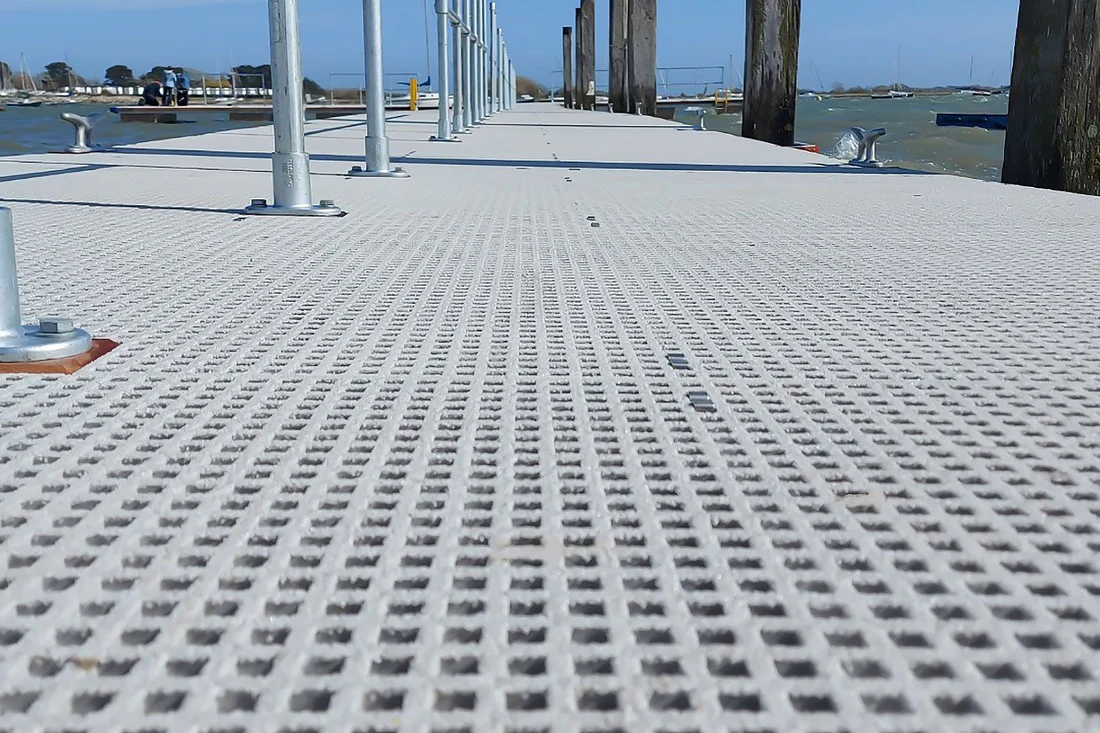
Industrial facilities operating in chemically harsh, high-moisture, or high-temperature environments face a serious challenge: maintaining safe, long-lasting, and reliable access systems. For decades, steel, aluminium, and timber dominated walkways, platforms, and flooring grids. But in aggressive environments—such as chemical processing plants, offshore rigs, desalination units, wastewater treatment sites, and high-salinity marine areas—traditional materials degrade rapidly.
The growing demand for materials that remain corrosion-free, structurally stable, and safe for workers has pushed industries toward high-performance composite solutions. Among these, GRP Grating has emerged as a superior engineering material offering unmatched safety advantages. Its combination of structural strength, corrosion resistance, and anti-slip technology makes it particularly valuable where environmental conditions are harsh, unpredictable, or hazardous.
Understanding the Material Architecture Behind GRP Safety
GRP (Glass Reinforced Plastic) is a composite formed by embedding strong glass fibres within durable thermosetting resin. The fibres act as structural reinforcement, while the resin protects the grating from chemical damage, moisture absorption, heat, and environmental degradation.
This combination produces a surface that is:
- Non-corrosive
- Non-conductive
- Shock-resistant
- UV-stable
- Fire-retardant (depending on resin grade)
These properties alone create an inherently safer platform for industrial environments, but the advantages extend much further.
Why Safety Matters More in Aggressive Environments
Aggressive environments refer to conditions where the atmosphere or operating processes accelerate the degradation of traditional construction materials. These include:
- High humidity or constant water exposure
- Chemical fumes or liquid spills
- High salinity and corrosive marine air
- Oil, grease, or fuel presence
- Electrical hazards
- High temperature fluctuations
- Abrasive foot traffic
- Rapid microbial growth areas
In such settings, ordinary metal gratings rust, weaken, and lose grip. Timber rots and becomes slippery. Concrete cracks and absorbs chemicals.
Safety risks increase dramatically, including:
- Slip and trip accidents
- Electrical conduction shocks
- Structural failure under load
- Fire hazards
- Toxic corrosion by-product exposure
Composite gratings significantly reduce or eliminate these hazards through material science.
How GRP Grating Enhances Safety in Harsh Industrial Settings
Below are the major safety benefits that make composite grating the preferred choice for aggressive environments.
1. Exceptional Corrosion Resistance Ensures Long-Term Safety
One of the most important safety features of composite grating is its inherent corrosion resistance. Unlike steel, it does not oxidise, rust, or pit, even when exposed to:
- Acids and alkalis
- Hydrocarbons
- Chlorine vapours
- Saltwater
- Chemical fumes
- Sewage gases
This ensures that workers always have a stable, intact, and safe walking surface without danger of sudden structural failure.
Safety advantages of corrosion resistance include:
- No weakened load-bearing bars
- Consistent grip over long periods
- No metal shards or flaking
- Reduced likelihood of platform collapse
- Lower maintenance interruptions
This is especially valuable in facilities where environmental exposure is unavoidable, such as offshore rigs or wastewater treatment tanks.
2. Slip-Resistant Surface Reduces Accident Risk
Slips and falls are among the most common industrial incidents. Aggressive environments often have surfaces coated with:
- Moisture
- Algae
- Oils
- Chemical residue
Composite grating counters this hazard through integrated anti-slip features. Most systems include a quartz-gritted surface that offers superior traction even in wet or oily conditions.
Key safety outcomes include:
- Reduced accident rates
- Better footing during emergency response
- Safe access for maintenance teams
- Compliance with HSE & OSHA safety requirements
In situations where surfaces stay continuously wet—such as chemical wash areas or desalination facilities—the anti-slip performance of composite systems remains reliable.
3. Non-Conductive Properties Prevent Electrical Hazards
In industrial sites where live electrical systems operate near walkways, traditional metal flooring creates a serious risk.
Composite grating is completely non-conductive, offering a protective barrier between workers and electrical hazards.
Safety benefits include:
- No electrical conduction during short circuits
- Safe working conditions around switchgear & transformers
- Reduced need for insulating mats
- Compliance with electrical safety standards
Electrical rooms, pump stations, and battery charging areas particularly benefit from this non-conductive flooring solution.
4. Fire Retardancy Enhances Workplace Protection
Many aggressive environments contain volatile chemicals or flammable materials. Composite gratings manufactured with fire-retardant resins provide self-extinguishing properties, reducing flame spread risk.
Why this improves safety:
- Minimises rapid-fire propagation
- Produces fewer toxic fumes during combustion
- Helps facilities meet fire safety legislation
- Maintains structural integrity longer than thermoplastics
This makes them ideal for offshore oil rigs, chemical processing units, and refineries where every second counts during an emergency.
5. Lightweight Structure Enhances Installation Safety
Traditional steel gratings are extremely heavy and require cranes or multiple lifting staff. Composite materials are far lighter, making them much easier and safer to install.
Safety benefits:
- Reduced manual handling injuries
- Faster placement in restricted-access areas
- No need for hot works
- Safer for maintenance teams working at height
This lightweight design also enables emergency replacement without shutting down entire operations.
6. High Impact Resistance Prevents Breakage Under Stress
Aggressive industrial environments often involve heavy equipment, falling tools, or rolling machinery. Composite gratings are designed to absorb impact without cracking, preventing dangerous failures.
Impact-related safety advantages:
- No sudden snapping or breakage
- Stable surface during heavy loads
- Continued performance in high-traffic zones
- Long-term structural reliability
This is particularly crucial in warehouses, mining platforms, and chemical plant catwalks.
7. Chemical Resistance Enhances Worker Health and Safety
Chemicals do not just corrode materials—they also create dangerous fumes and reactions when they come into contact with metals. Composite grating is chemically inert and does not react with industrial liquids.
Safety benefits include:
- No hazardous chemical-metal reactions
- Easier spill management
- Less vapour generation
- Safer long-term exposure for workers
This property is vital in laboratories, processing facilities, and wastewater treatment plants.
Industries That Benefit Most from GRP Safety Features
The superior safety performance of composite grating makes it indispensable across various sectors:
Chemical Processing
- Withstand acids, alkalis, solvents
- Prevent slips from chemical spills
Wastewater Treatment
- Resist microbial corrosion
- Offer long-term slip resistance
Marine & Offshore
- Withstand salt spray
- Provide UV and corrosion protection
Power Generation & Electrical
- Non-conductive under all conditions
- Fire-safe properties enhance reliability
Oil & Gas
- Resist hydrocarbons
- Minimise static conductivity risks
Food & Beverage
- Hygienic and non-reactive
- Anti-slip in wet processing rooms
Where safety is priority, composite grating is becoming the industry standard.
Long-Term Cost Efficiency Also Supports Safety
When equipment requires frequent replacement, industrial safety decreases due to:
- More downtime
- Frequent access by maintenance staff
- Reduced surface integrity over time
Composite gratings require minimal maintenance, allowing safer and more predictable operation.
Cost-related safety advantages:
- Fewer shutdowns
- Longer service life
- Predictable inspection cycles
- Lower risk of corrosion-related accidents
This reliability keeps workers safer throughout the lifecycle of the facility.
FAQs
Is composite grating suitable for extremely corrosive chemical areas?
Yes, composite grating performs exceptionally well in areas with severe chemical exposure. Its glass fibre and resin composition is resistant to acids, alkalis, solvents, and corrosive fumes, ensuring a long-lasting and safe walking platform even in the most aggressive industrial settings.
Does surface wear affect the anti-slip properties?
Composite grating is manufactured with a deeply embedded grit surface designed for long-term use. Even after years of foot traffic, the anti-slip properties remain reliable. While extreme abrasion may reduce sharpness slightly over time, performance continues to exceed traditional flooring materials.
Can this type of flooring handle heavy industrial loads?
Yes, composite gratings—especially pultruded variants—can withstand significant load requirements. They are engineered for high-strength applications and maintain structural stability under machinery, equipment, and high foot traffic, making them suitable for industrial plants, offshore rigs, and utility stations.
Conclusion
Aggressive industrial environments demand flooring systems that can resist corrosion, withstand chemical exposure, deliver long-term structural strength, and maintain a safe walking surface under all conditions. Composite grating meets these demanding expectations through its unique material composition and engineering excellence.
Its corrosion-free structure, non-conductive nature, fire-retardant properties, and superior slip resistance make it one of the safest and most reliable flooring solutions available today. Industries operating in high-risk environments—from offshore platforms to wastewater treatment plants—depend on these advanced systems to protect both workers and assets. Start exploring smarter by returning to our main homepage.